5 Signs Your NYC Railing Needs Repair or Replacement
New York is one of the toughest environments in the country for outdoor ironwork. Between winter road salt, freeze-thaw cycles, summer humidity, and constant use, railings in this city take a beating. Here's how to tell when yours needs attention.

1. Rust and Corrosion at the Base
This is what we see more than anything else. The base of a railing — where the posts meet the stoop, sidewalk, or concrete — is where salt-laden moisture collects in winter. Once rust gets started inside the post, it spreads fast. If you see orange or brown discoloration at the base, or the concrete around the post is cracking and crumbling, the railing is already compromised.
Deep base corrosion usually means replacement, not repair. The post has lost structural integrity where it matters most.
2. Movement or Wobble
Grab the railing and push hard. If it moves at all, the anchors have failed. In NYC, this is almost always caused by corroded anchor bolts — decades of salt and moisture eat through the bolts inside the masonry. A wobbly railing on a stoop or stairway is a real safety hazard, and in a city with DOB liability exposure, it's not something to ignore.
3. Flaking Paint or Missing Finish
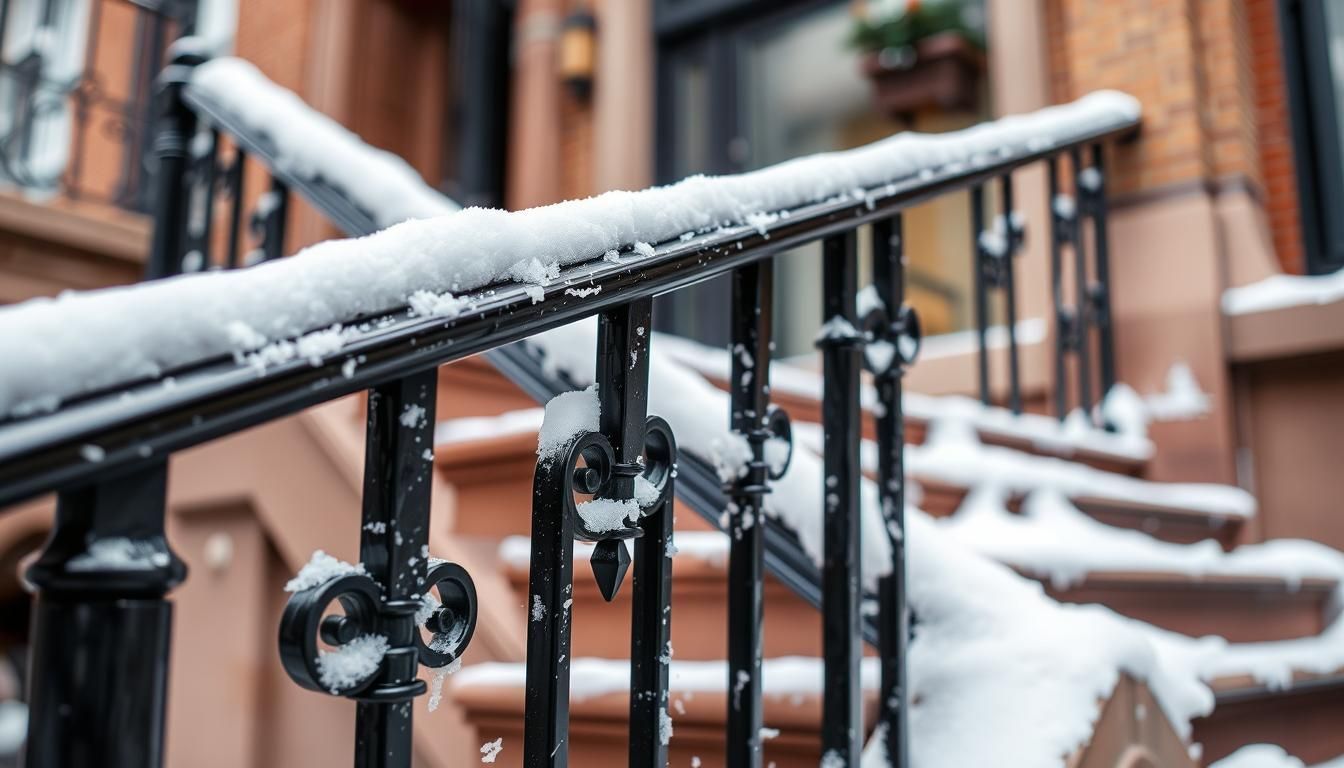
If the paint or coating is cracking, bubbling, or gone entirely, the bare iron underneath is exposed. In New York's winters, bare iron will rust visibly within weeks. A railing that's lost its finish can sometimes be stripped and re-coated, but if the rust has already progressed into the metal, a replacement is the smarter investment.
4. Crumbling Masonry Around the Railing
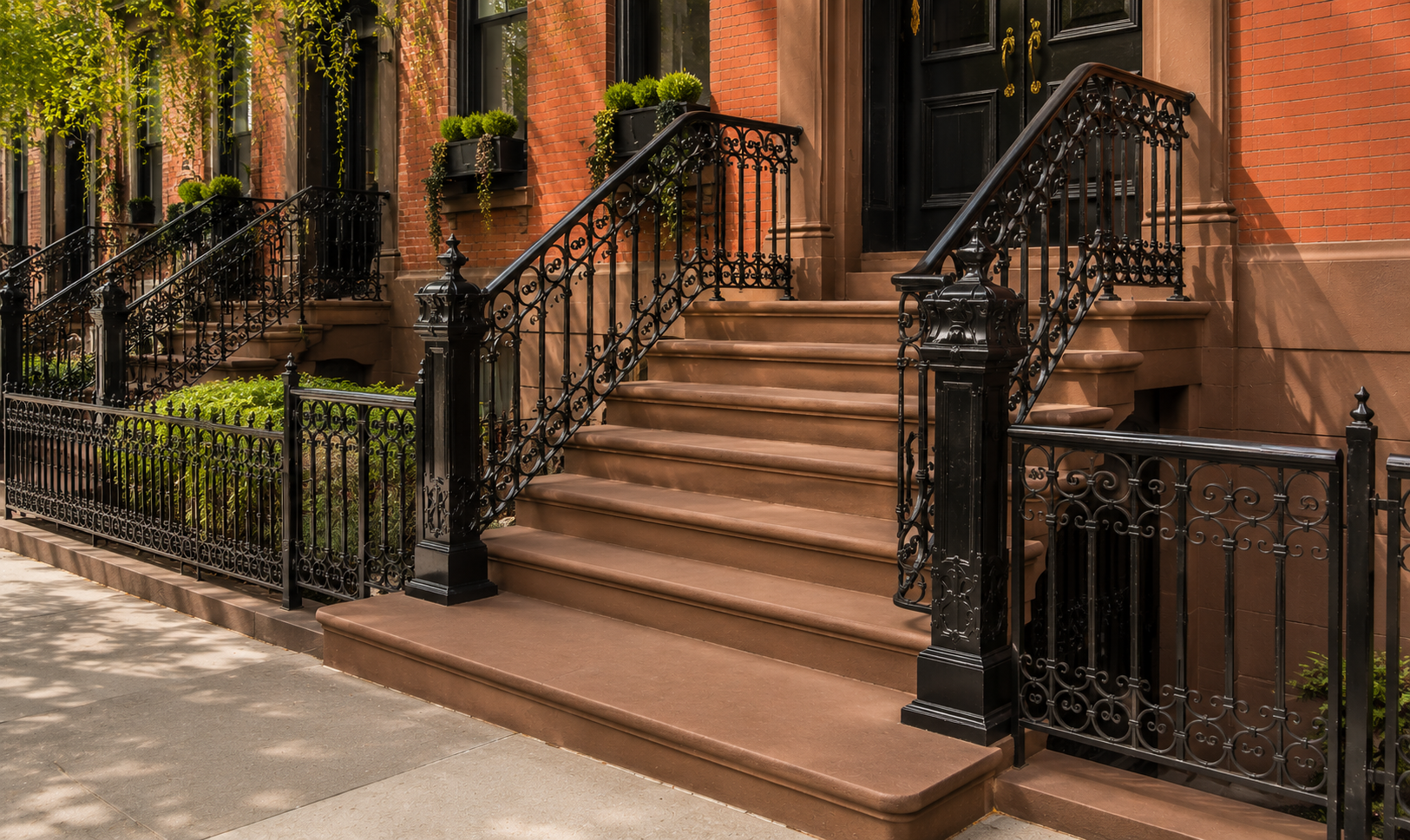
This is common on brownstone stoops. As the iron posts corrode, they expand slightly, which cracks the surrounding stone or concrete. Once the masonry starts crumbling around the base, the railing's anchor is failing. In many cases, the masonry repair and railing replacement need to happen together.
5. Non-Compliant Spacing or Height
If your railing was installed decades ago, it may not meet current NYC code — especially the 4-inch baluster spacing requirement and the minimum height requirements. This might not be an issue day-to-day, but it can be flagged on a DOB inspection, a property sale inspection, or a co-op/condo board review.
When to Act
Don't wait for a complete failure. A railing that's showing early signs of base corrosion or wobble can often be replaced proactively on your schedule. A railing that collapses creates a liability problem and usually costs more to deal with as an emergency.
Call (917) 267-2500 for a free assessment — we'll tell you honestly whether repair or replacement makes more sense.
You might also like