Brownstone Stoop Railings: What NYC Homeowners Need to Know
Why Brownstone Stoop Railings Fail
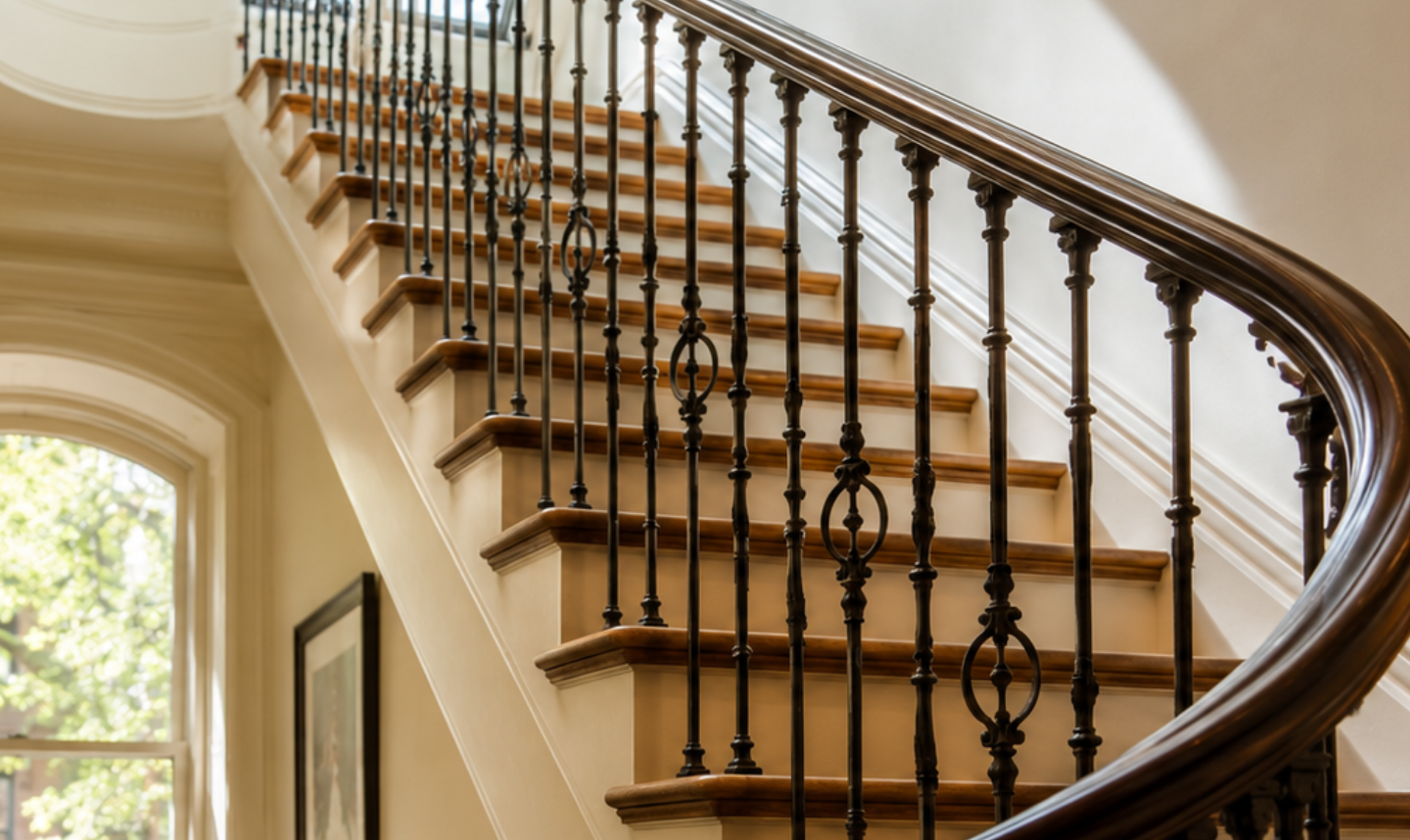
If you own a brownstone in Brooklyn, Manhattan, or any other borough, there's a good chance you've either already dealt with a deteriorating stoop railing or you will soon. New York's freeze-thaw winters and road salt exposure are brutal on exterior ironwork, and most original brownstone railings are well past the point of simple touch-up repairs.
Here's what to know before you start.
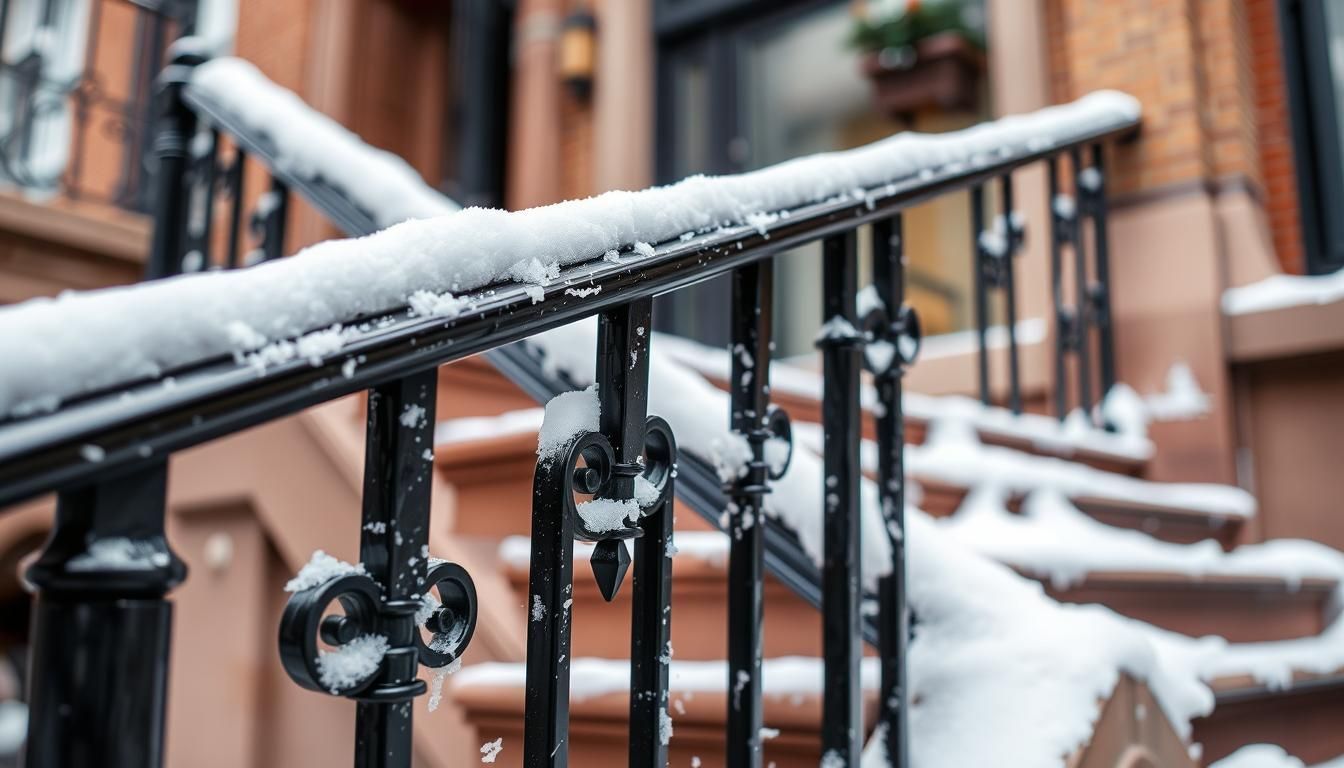
The number one cause is corrosion at the base. Where the iron posts are set into the stoop's stone or concrete, moisture collects and sits — especially in winter when salt-laden slush pools on the steps. Over years and decades, that moisture rusts the iron from the inside out. By the time you see visible rust on the surface, the damage inside the post is usually much worse.
Freeze-thaw cycles make it worse. Water gets into small cracks, freezes, expands, and creates larger cracks. Each winter cycle accelerates the deterioration.
Historic Districts and the LPC
If your brownstone is in a New York City historic district, you can't install just any railing. The Landmarks Preservation Commission requires that exterior changes — including railing replacements — be appropriate to the building's era and architectural character.
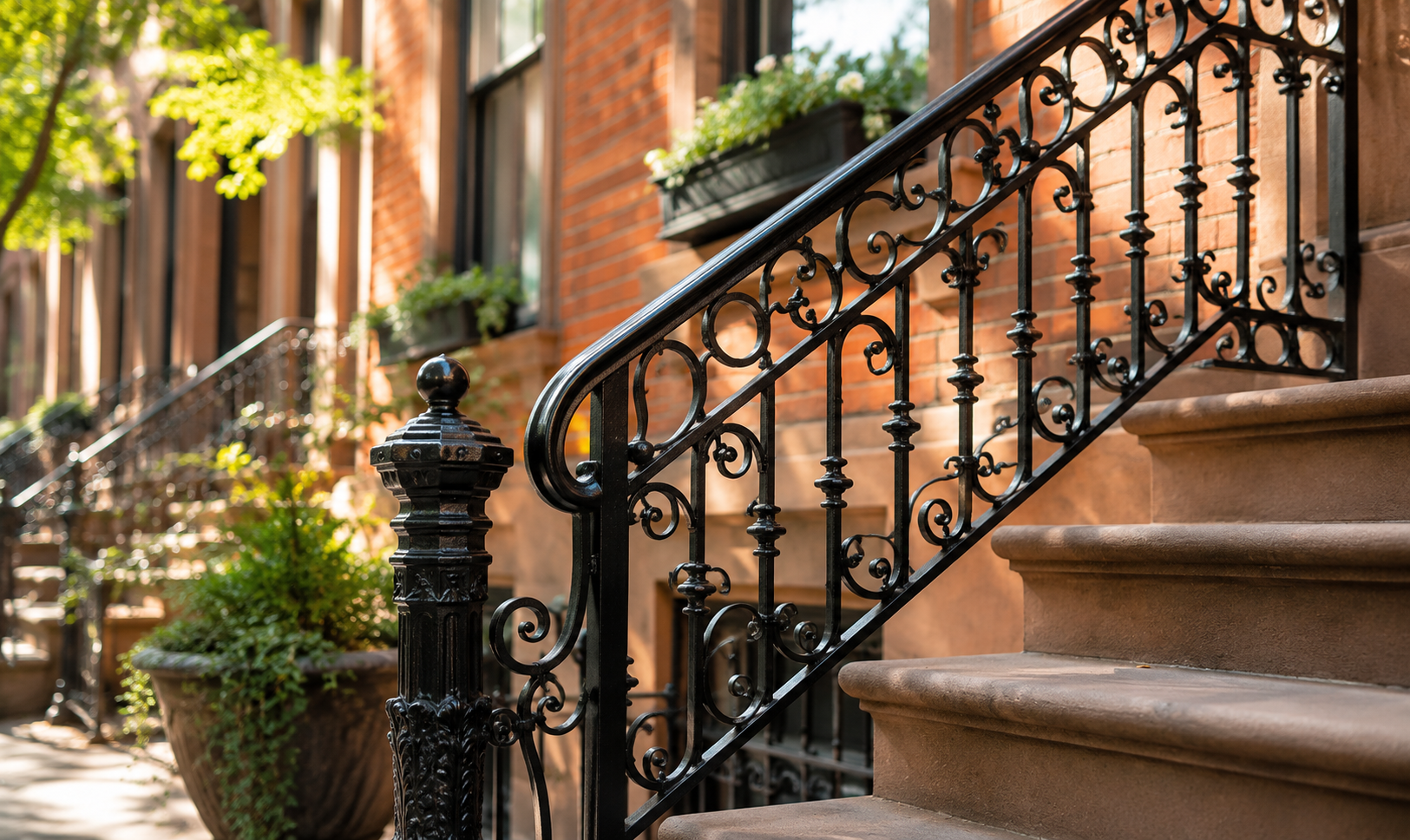
In practice, this means your replacement railing needs to match the period design of your building. For a typical 1880s brownstone, that usually means a simple iron railing with a curved profile and modest detailing — not an ornate Victorian design and not a modern minimalist bar.
We've fabricated railings for LPC-regulated properties across Park Slope, Brooklyn Heights, Fort Greene, Greenwich Village, Harlem, and other historic districts. We can work from photos of the original railing or from the LPC's design guidelines for your district.
If your building is not in a historic district, you have more design flexibility — though most brownstone owners still choose a classic iron design that fits the building's character.
NYC Building Code Requirements
Even on a simple stoop railing replacement, the new railing needs to meet current NYC Building Code. Key requirements: minimum 36 inches high, graspable handrail between 1.25 and 2 inches in diameter, baluster openings no wider than 4 inches.
What It Costs
Brownstone stoop railings vary depending on length, design complexity, and whether LPC approval is involved. A standard stoop railing on a typical Brooklyn brownstone typically runs between $1,500 and $4,000 installed. More elaborate designs or LPC-required custom fabrication will be on the higher end.
Galvanizing Matters
For any exterior iron railing in New York, hot-dip galvanizing is the right finish — not just paint or powder coating. Galvanizing bonds a zinc layer to the iron that protects against corrosion far more effectively than any surface coating. A galvanized brownstone railing should last 30+ years in New York conditions.
Ready to replace your stoop railing? Call (917) 267-2500 for a free estimate.
You might also like